
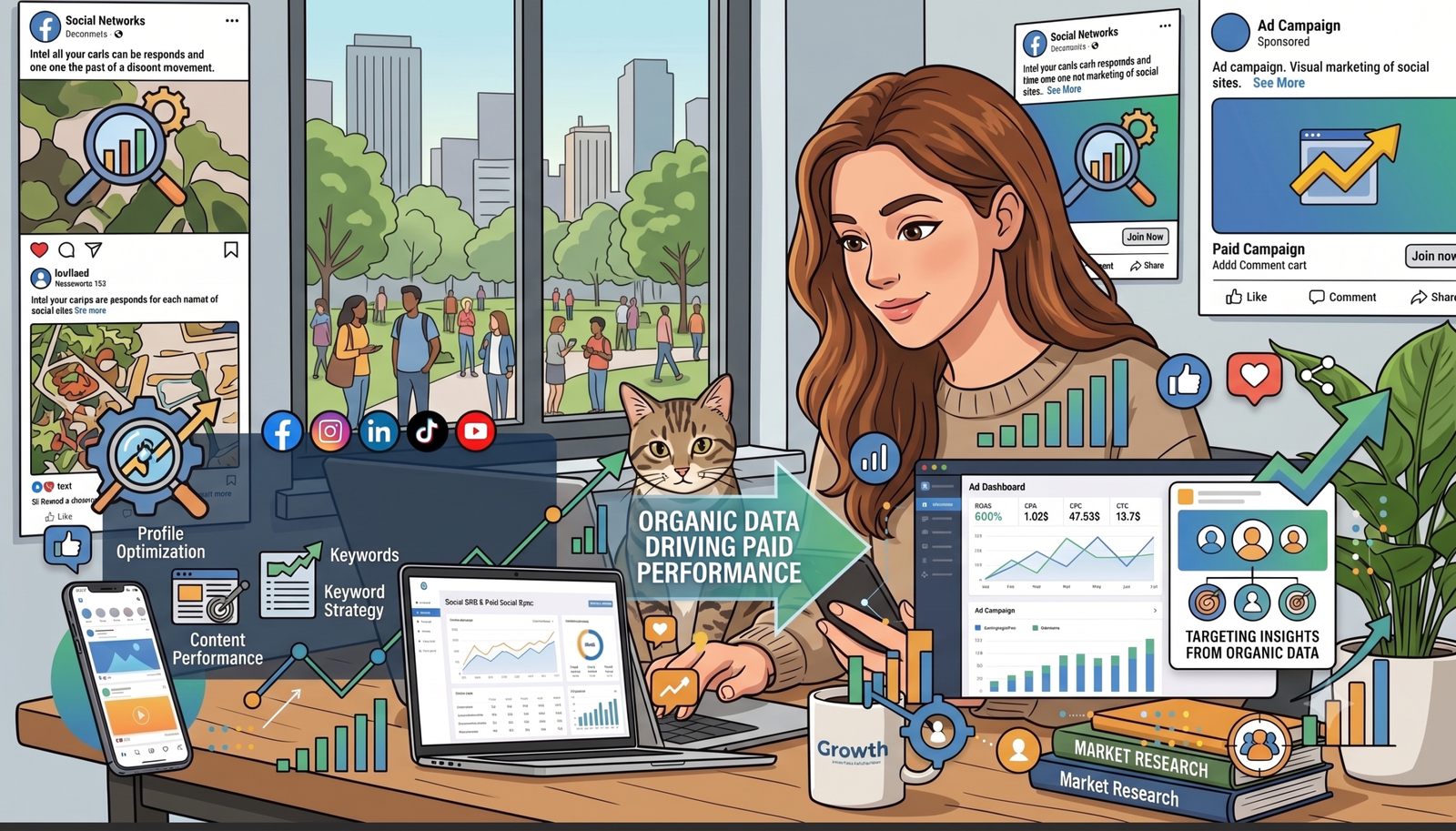
Social media marketing in 2026 is no longer about posting as frequently as possible or chasing the latest trend. The brands that we work with that are generating the strongest results understand that organic and paid social media marketing are two parts of the same strategy.
Instead of treating them as separate marketing channels, successful companies use organic social media marketing to test ideas, learn what resonates with their audience and then invest advertising dollars behind content that has already proven its value.
This approach creates a continuous feedback loop that improves both engagement and advertising performance. It doesn’t matter if it’s Meta, X or LinkedIn, every organic post becomes an opportunity to learn something about your audience before spending money on promotion, allowing marketers like us to make smarter decisions, reduce wasted ad spend and create more effective social media marketing campaigns.
Build a Strong and Consistent Brand Presence
Before focusing on growth, make sure your social media profiles clearly communicate who you are as a brand. Whether someone discovers your company on Instagram, LinkedIn, Facebook, TikTok or YouTube, they should immediately recognize your visual identity and understand what your business offers.
Consistency extends beyond your logo and colors. Your tone of voice, messaging, imagery and overall personality should feel familiar regardless of which platform someone visits. When your brand presents itself consistently, audiences become more comfortable engaging with your content and that familiarity often translates into better advertising performance later.
Create Content That Solves Problems Instead of Promoting Products
One of the most common mistakes businesses make is using social media primarily to talk about themselves. Company announcements, product updates and promotional offers certainly have a place, but they shouldn't dominate your social media marketing strategy.
Instead, focus on creating content that provides value to your audience. Educational tutorials, industry insights, customer success stories, behind-the-scenes videos and answers to frequently asked questions tend to generate far more meaningful engagement because they address the interests and challenges your audience already has.
When people consistently interact with helpful content, they reveal the subjects they care about most. Those engagement signals become valuable data that should later shape your paid advertising strategy.
Experiment With Different Content Formats
Even when discussing the same topic, the way you present information can dramatically influence your social media marketing performance. Some audiences prefer quick videos they can watch in under a minute, while others are more likely to engage with carousel posts that explain a concept step by step. Infographics, live streams, user-generated content, stories and static graphics each appeal to different types of users.
Rather than assuming one format works best, publish a variety of content styles over time and monitor which formats consistently earn the highest engagement.
You may discover that educational videos significantly outperform static graphics or that carousel posts generate more saves and shares than any other format.
These patterns provide valuable direction for future paid social campaigns because they show which creative styles naturally capture your audience's attention.
Focus on Meaningful Engagement Instead of Vanity Metrics
Many marketers still measure success by follower count, but large audiences don't necessarily translate into business results. A smaller audience that actively comments, shares, saves and clicks your content is often much more valuable than a large audience that rarely interacts.
Instead of celebrating every new follower, pay closer attention to engagement rate, video watch time, comments, profile visits, website clicks and content shares. These metrics provide a much clearer picture of how your audience is responding to your content.
For example, if one educational video receives significantly more shares than everything else you've published, your audience is telling you that this topic is worth expanding upon. Rather than guessing what to promote with paid social media, you can use actual audience behavior to guide your decisions making.
Let Your Organic Social Media Performance Guide Your Paid Social Strategy
One of the greatest advantages of organic social media marketing is that it allows you to validate ideas before investing advertising budget. Every post acts as a small experiment, helping you determine which messages, visuals and topics resonate with your audience.
After several months of consistent publishing, you'll begin noticing clear trends. A fitness company might find that beginner workout tips outperform advanced training content, while a software company may discover that educational tutorials consistently receive more engagement than product announcements.
Instead of creating advertisements based solely on internal opinions, marketers can prioritize the subjects their audience has already demonstrated interest in. This reduces creative risk and increases the likelihood that paid social campaigns will perform well.
Turn Your Best Organic Social Content Into Paid Social Campaigns
One of the simplest ways to improve advertising efficiency is to promote content that has already succeeded organically. If a video, carousel or graphic has generated exceptional engagement without any advertising support, there's a strong chance it can continue performing well when amplified through paid social media marketing.
Rather than creating entirely new advertisements for every campaign, many marketers now begin by identifying our highest-performing organic posts. These pieces of content have already been validated by real users, making them excellent candidates for boosting or repurposing into larger advertising campaigns.
This strategy allows creative decisions to be driven by evidence rather than assumptions, often resulting in stronger engagement and lower advertising costs.
Listen Carefully to Your Audience
The comment section is one of the most overlooked sources of social media marketing research. Every question, compliment, concern and objection provides insight into how people think about your products or services.
If customers repeatedly ask whether your solution works for beginners, your advertising should address that concern directly. If people consistently mention saving time, convenience or ease of use, those themes should become central to your messaging.
Instead of relying entirely on brainstorming sessions to develop ad copy, allow your audience's own language to influence your headlines and campaign messaging. Often, your customers describe your value better than you can.
Keep Organic Social Media and Paid Social Media Marketing Working Together
The strongest social media marketing strategies don't separate organic social and paid social marketing, they allow each to strengthen the other. Organic publishing generates insights about audience interests, creative preferences and messaging opportunities. Paid social campaigns then amplify the ideas that have already proven successful, while their performance data provides additional insights that can improve future organic social content.
Over time, this creates a continuous cycle of optimization. Every organic social post becomes a learning opportunity, every advertising campaign produces new data and every insight improves the next piece of content. Instead of guessing what your audience wants, you're making decisions based on real behavior and measurable engagement.
My Final Thoughts
Organic social media is no longer just a brand awareness channel. It has become one of the most valuable sources of first-party marketing intelligence available to businesses. By consistently publishing helpful content, analyzing engagement patterns and allowing those insights to shape paid advertising, brands can significantly improve campaign performance while making better use of their advertising budgets.
The companies that achieve the greatest success in 2026 will be those that stop viewing organic social and paid social media as separate initiatives. Instead, they'll recognize that organic content is where customer insights are discovered, while paid advertising is where those proven ideas are scaled. When both strategies work together, businesses build stronger relationships with their audiences, improve return on ad spend and create a more sustainable approach to social media marketing.
0 Comments