

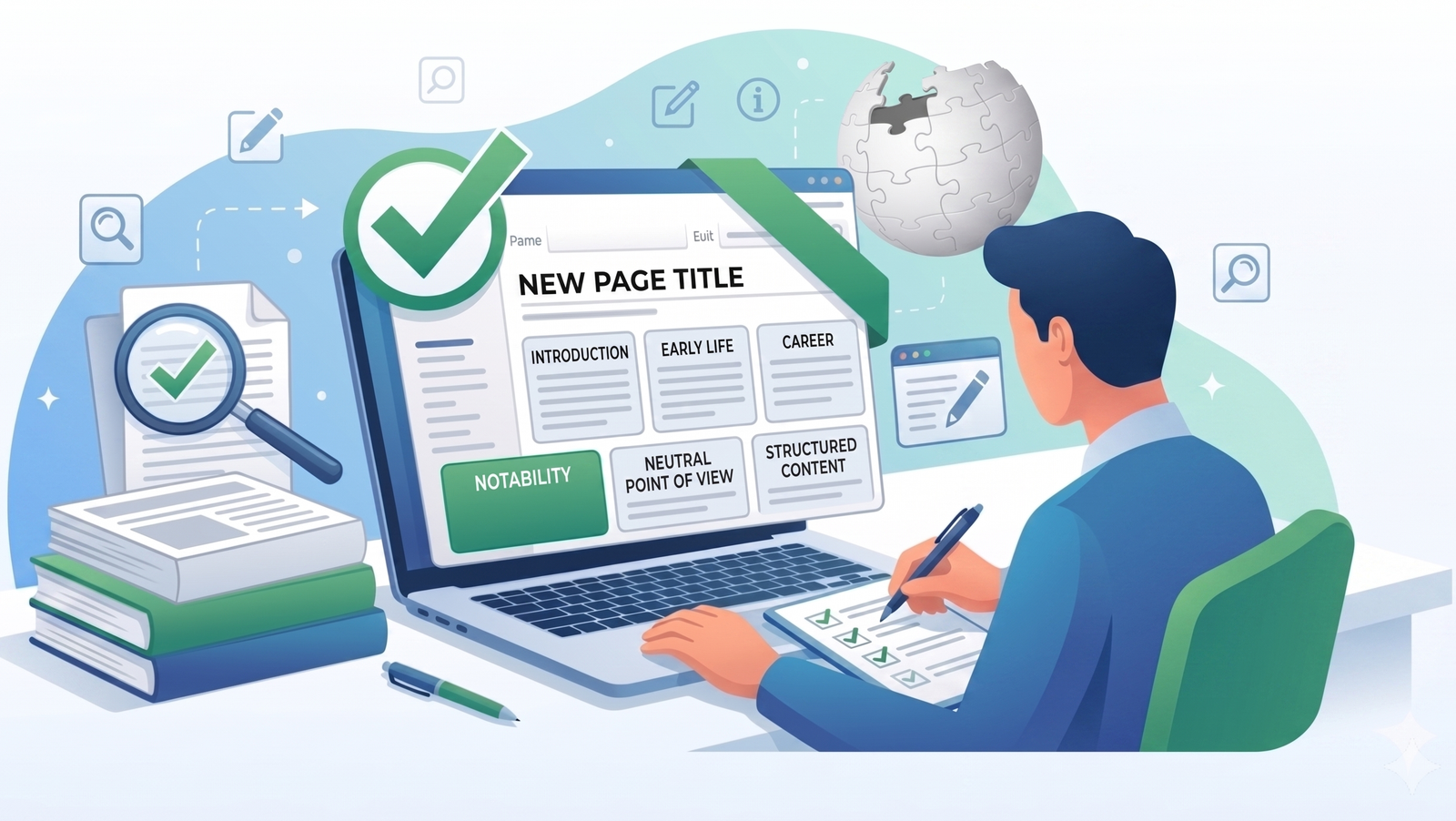
A Wikipedia page can be a valuable way to document a notable person, company, organization, or product. Because Wikipedia is one of the most trusted and visited websites in the world, many brands and public figures are interested in establishing a presence on the platform.
However, creating a Wikipedia page isn't as simple as publishing content on your own website, as I’m sure you’ve realized. Wikipedia has strict editorial guidelines, volunteer moderators and a community-driven review process designed to ensure that every page is neutral, verifiable and notable.
If you're wondering how to create a Wikipedia page that has the best chance of being approved, our guide will walk you through the process step by step. We’ve been Wikipedia moderators for over a decade and have built hundreds of Wikipedia pages.
Step 1: Make Sure the Subject Meets Wikipedia's Notability Guidelines
The biggest reason a new Wikipedia page is rejected is because the subject is not considered notable enough.
On Wikipedia, notability doesn't mean popularity. Instead, it means the subject has received significant coverage from reliable, independent sources.
Examples of acceptable sources include
- Major newspapers
- National or regional magazines
- Academic journals
- Books from reputable publishers
- Well-known industry publications
- Independent news websites
Sources that generally do not establish notability include
- Your own website
- Press releases
- Social media profiles
- Company blogs
- Paid advertisements
- Directory listings
Before writing anything, search online to determine whether multiple independent publications have written about the subject in meaningful detail.
Step 2: Gather Reliable Independent Sources
Every statement on a Wikipedia page should be backed by reliable citations.
The stronger your references, the stronger your page.
Try to collect
- News articles
- Interviews published by third parties
- Books
- Research papers
- Government publications
- Industry reports
Having at least several high-quality independent sources will significantly improve your chances during the review process. Remember that Wikipedia values verifiability above all else.
Step 3: Create a Wikipedia Account
Although anyone can edit Wikipedia, creating an account offers several advantages.
Registered users can
- Build an editing history
- Create draft articles
- Communicate with other editors
- Receive feedback
- Track page changes
It's often recommended that new contributors spend some time making small edits to existing articles before creating a brand-new page. A positive editing history can help demonstrate familiarity with Wikipedia's guidelines.
Step 4: Write in a Neutral Tone
One of the fastest ways to have a Wikipedia page rejected is by writing promotional content. Wikipedia is an encyclopedia; not a marketing platform.
Avoid language like
- Industry-leading
- Best-in-class
- Revolutionary
- Award-winning (unless independently sourced)
- Trusted by millions
Instead, write factual, balanced, and objective content.
Example
Instead of: "ABC Company is the world's leading cybersecurity provider."
Write: "ABC Company is a cybersecurity company founded in 2015. According to Example Publication, the company specializes in cloud security software."
Every claim should be supported by a citation whenever possible.
Step 5: Follow Wikipedia's Standard Article Structure
Most successful Wikipedia pages follow a consistent format.
Typical sections include:
Introduction
Provide a concise overview of the subject.
History
Explain how the organization, person, or topic developed over time.
Products or Services
If relevant, describe what the organization does using neutral language.
Recognition
Mention awards, milestones, or notable achievements only if they have independent sources.
References
List every citation using Wikipedia's preferred formatting, a clean structure makes the page easier for editors to review.
Step 6: Avoid Conflicts of Interest
Wikipedia strongly discourages people from writing about themselves or their own organizations without disclosing their connection. If you work for the company or represent the individual you're writing about, it's best to:
- Disclose your conflict of interest on your user page
- Draft the article in the Articles for Creation process
- Request that independent editors review the submission
Being transparent helps build trust within the Wikipedia community. I can’t begin to tell you how many times I reject article submissions because people aren’t being honest about their connection with the person or business they’re submitting on behalf of.
Step 7: Submit the Article as a Draft
Rather than publishing immediately, submit the article as a draft.
This allows experienced volunteer reviewers to evaluate whether the page meets Wikipedia's requirements before it appears in the encyclopedia.
Reviewers may:
- Approve the article
- Suggest revisions (most common)(I do this a lot)
- Request additional citations
- Decline the draft with feedback
A declined draft isn't necessarily the end of the process. Many successful articles go through multiple revisions before being accepted.
Step 8: Respond to Feedback Professionally
Wikipedia moderators and volunteer editors often leave detailed comments explaining why changes are needed.
Common issues with feedback are typically:
- Insufficient independent sourcing
- Promotional language
- Lack of notability
- Poor formatting
- Missing citations
Rather than arguing, address each concern carefully. Improving the article based on feedback greatly increases the likelihood of eventual approval.
Step 9: Continue Monitoring the Page
Even after approval, a Wikipedia page is never truly finished, because Wikipedia is collaboratively edited, anyone can make changes.
You should periodically review the page for:
- Vandalism
- Outdated information
- Broken citations
- New reliable sources
- Formatting issues
Common Reasons a Wikipedia Page Gets Rejected
Understanding why articles are rejected can help you avoid common mistakes. Some of the most frequent reasons include:
- Not enough independent sources
- Promotional or sales-focused writing
- Original research
- Unsourced claims
- Conflict of interest concerns
- Failure to establish notability
- Copyright violations
- Excessive reliance on press releases
Best Practices for Long-Term Success
Creating a successful Wikipedia page is about contributing knowledge; not promoting a brand.
Some best practices:
- Use multiple independent references
- Keep the writing neutral and factual
- Cite every significant claim
- Avoid marketing language
- Be transparent about conflicts of interest
- Accept editorial feedback constructively
- Update information only when supported by reliable sources
Final Thoughts
Creating a Wikipedia page that is accepted by volunteer reviewers requires preparation, patience and a commitment to Wikipedia's editorial standards. There is no guaranteed approval process, but following the platform's guidelines can significantly improve your chances.
Focus first on establishing the subject's notability through independent, reliable coverage. Then write a balanced, well-cited article that informs rather than promotes. By submitting a carefully researched draft, responding thoughtfully to reviewer feedback and maintaining a neutral perspective, you'll be giving your Wikipedia page the strongest possible foundation for acceptance.
Remember that Wikipedia exists to document notable topics for the benefit of readers, not to serve as a marketing channel. Approaching the process with that mindset is one of the most effective ways to contribute a page that meets the community's expectations and stands the test of time.
0 Comments