
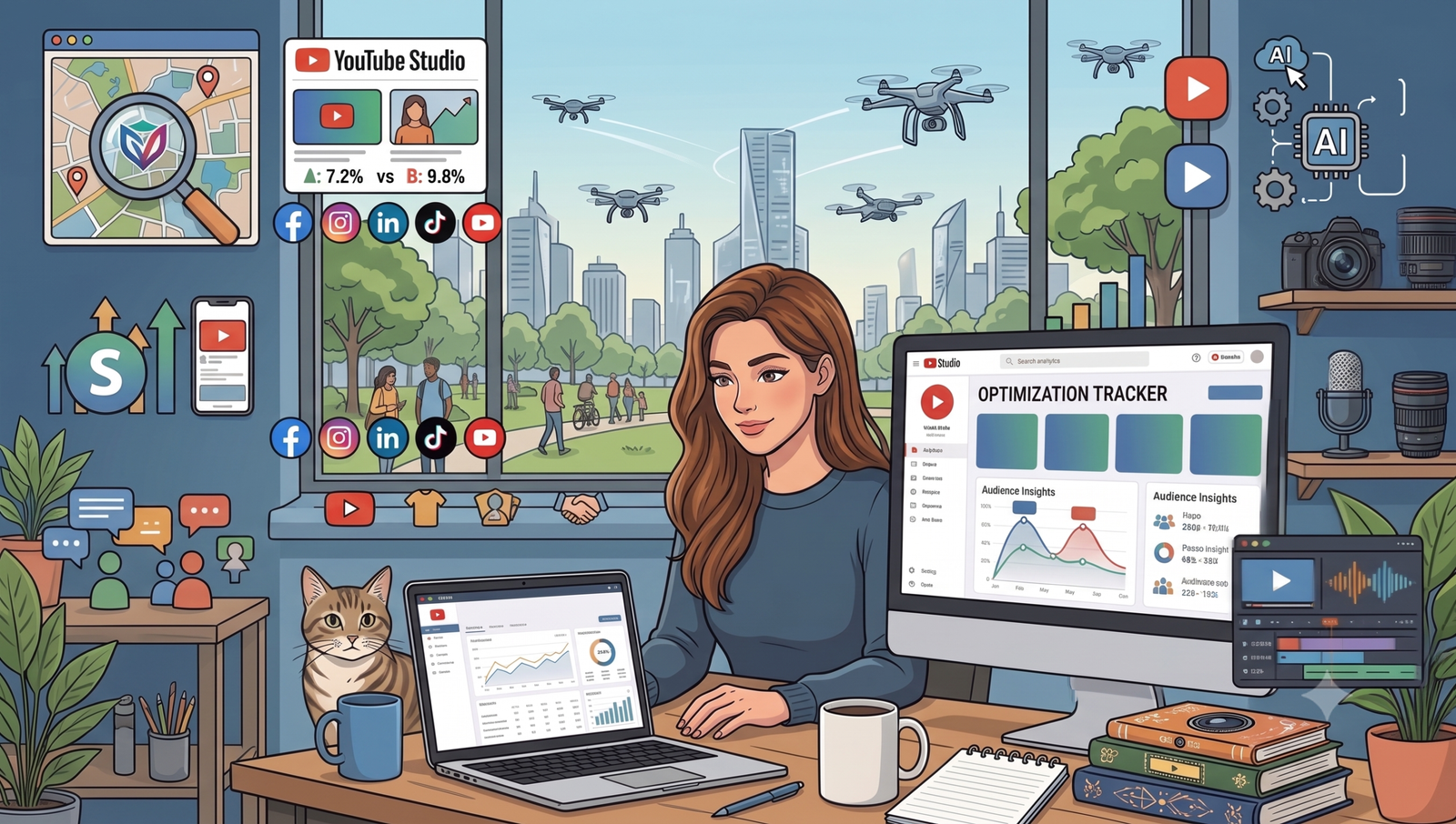
YouTube continues to be one of the most powerful search engines in the world, but the platform has evolved dramatically. In 2026, success on YouTube is no longer just about creating great videos, it's about optimizing every aspect of your channel for both viewers and AI generative discovery.
Search engines, large language models (LLMs) like ChatGPT and Gemini, Google's AI Overviews and YouTube's own recommendation algorithms are all becoming better at understanding content, user engagement and authority. As a result, creators and brands that invest in YouTube optimization will see better visibility, stronger audience growth and increased conversions.
Here are the ten most important areas to focus on if you want your YouTube channel to thrive in 2026.
1. Create Videos That Answer Specific Questions
The days of producing generic content are over. Today's audiences and AI search engines like Perplexity reward videos that directly answer real questions people are asking.
Before creating a video, research:
- Google Autocomplete
- YouTube Search suggestions
- Reddit discussions
- Quora
- Industry forums
- AI generated search queries
Instead of creating a video titled: "How to Use Photoshop"
Create something like: "How to Remove Backgrounds in Photoshop in Under 60 Seconds."
Specificity improves click-through rates while helping YouTube understand exactly who should see your content.
2. Optimize Titles for Humans First, Algorithms and AI Engines Second
Many creators still write titles solely for keywords.
That strategy is outdated.
The best-performing titles combine:
- Search intent
- Curiosity
- Keywords
- Readability
Example
Instead of: "SEO Tips 2026"
Use: "10 SEO Tips That Actually Increase Rankings in 2026"
The primary keyword should still appear naturally, but the title should encourage users to click because YouTube's recommendation system heavily weighs click-through rate.
3. Write Rich, Informative Video Descriptions
Descriptions are far more important than many creators realize.
They provide additional context that helps YouTube and AI engines understand your content.
A strong description should include:
- A summary of the video
- Important keywords naturally woven into sentences
- Chapters
- Relevant links
- Calls-to-action
- Related resources
Avoid stuffing keywords repeatedly!
Instead, write descriptions as if you're explaining the video to someone who hasn't watched it yet.
4. Design High-Performing Thumbnails
Your thumbnail may be the single biggest factor influencing whether someone clicks your video.
Great thumbnails share several characteristics:
- High contrast
- Large readable text
- Clear facial expressions (when it makes sense)
- One obvious focal point
- Minimal clutter
- Consistent branding
Many successful creators spend nearly as much time designing thumbnails as they do editing the video itself.
Even a small increase in click-through rate can dramatically increase long-term video performance. Think about that.
5. Improve Audience Retention
Retention has become one of YouTube's strongest ranking signals.
The platform wants viewers to stay engaged.
Focus on:
- Strong hooks during the first 15 seconds
- Removing unnecessary introductions
- Faster pacing
- Visual changes every few seconds (3-5 seconds)
- Graphics and animations
- Storytelling
- Open loops that keep viewers watching
Instead of telling viewers what you're going to cover for thirty seconds, start by immediately delivering value. Stop wasting time!
Every second counts.
6. Build Topical Authority Around One Niche
One mistake many creators make is publishing videos on unrelated topics.
YouTube increasingly rewards topical authority.
Rather than uploading videos about:
- Marketing
- Fitness
- Cooking
- Investing
on the same channel, focus deeply on one subject and showcase your expertise in that subject.
For example, if your niche is digital marketing, create clusters around:
- SEO
- Google Search
- ChatGPT optimization
- AI search
- Content marketing
- Local SEO
- Technical SEO
As YouTube recognizes your expertise, your recommendations across related topics become stronger.
7. Optimize for AI Search and Large Language Models
This is one of the biggest changes in 2026.
AI engines are increasingly referencing YouTube videos when answering user questions.
To improve your visibility:
- Speak clearly during videos
- Answer questions directly
- Use descriptive chapter titles
- Include transcripts
- Publish supporting blog articles
- Cite credible sources
- Create educational content rather than purely promotional material
The easier your information is for AI engines like Grok, Pi, Gemini and ChatGPT to understand, the greater the chance your content will be surfaced in AI engine search experiences.
8. Encourage Meaningful Engagement
Not all engagement carries the same value.
Instead of asking viewers to simply "like and subscribe," encourage conversations.
Examples:
- "What's your biggest challenge with YouTube SEO right now?"
- "Have you tried this YouTube SEO strategy?"
- "Which tool works best for YouTube SEO?"
- "What topic should I cover next about YouTube SEO?"
The more thoughtful the discussion in your comments, the stronger the engagement signals become.
Creators who actively respond to comments often build stronger communities while increasing return viewers.
9. Create Connected Content Through Playlists and Series
Think of your channel like a website. Every video should lead naturally to another. Create playlists around specific topics.
Examples include:
- Beginner SEO
- Advanced SEO
- AI Marketing
- YouTube Optimization
- Google Business Profile
- Local Search
At the end of every video, guide viewers toward another related video.
This increases session watch time, which remains an important ranking factor for YouTube's recommendation system.
10. Measure What Actually Matters
Many creators obsess over views. Views alone don't tell the whole story!
Instead, monitor metrics such as:
- Audience retention
- Watch time
- Returning viewers
- Subscriber conversion rate
- Click-through rate
- Engagement rate
- Shares
- Playlist completion
- Average view duration
These metrics provide a much clearer picture of how valuable your content is to your audience.
Use YouTube Analytics regularly to identify your best-performing content, then create additional videos around those successful topics.
Final Thoughts on YouTube SEO
Optimizing a YouTube channel in 2026 requires much more than inserting keywords into titles and descriptions. Success comes from creating genuinely helpful content, improving viewer experience and making it easy for both YouTube's recommendation system and AI-powered search engines like Perplexity to understand your expertise.
Creators who consistently answer real user questions, build topical authority, encourage meaningful engagement and produce high-quality viewing experiences will be in the best position to grow their audience.
As AI continues reshaping search and content discovery, YouTube remains one of the most valuable platforms for building authority, generating leads and establishing long-term brand visibility. The creators who adapt now will have a significant competitive advantage in the years ahead.
0 Comments